Navigating Data Management in the Age of AI: Human-Centric Governance, Consciousness, and Leadership
In the first episode of the "She Leads" initiative, host Natalia Kotova and co-host Carmela Ana Melone (Research and Content Lead at international analyst firm TGOA) sat down with Christelle Patriarca. Drawing from two decades of experience working with global enterprises such as LVMH, Bacardi, and Nestlé, Christelle shared her insights on why modern data strategy requires shifting focus away from pure technology toward human interaction, agile culture, and conscious leadership.
Christelle Patriarcha’s Core Philosophy: Human-Centric and Conscious Data Management
At the heart of Christelle Patriarcha’s strategy is a human-centric, agile, and consciousness-driven philosophy. Rather than treating data management purely as a technical or software challenge, her framework emphasizes that technology must serve human connection and clear business goals.
Key Pillars of Her Philosophy:
- The 80/20 Rule of Human Interaction: Approximately 80% of effective data management relies on human interaction, empathy, active listening, and understanding stakeholder perspectives. Technical tasks and programming make up only 20% of the puzzle.
- Business-Driven Data Governance: Organizations must avoid trying to "boil the ocean" by attempting to fix every piece of data. Data governance must start with specific business needs and build organizational structures to support those exact priorities before implementing software tools.
- Agile Mindset over Silos: Applying an agile culture - distinct from rigid project management frameworks helps break down traditional departmental data silos, such as financial departments keeping data to themselves. True success relies on cross-functional alignment and open collaboration.
- Voluntary Communities Built on Trust: Sustainable data initiatives are built by inviting individuals who possess genuine interest and curiosity rather than forcing participation. Sustainable practice requires creating safe spaces and long-term trust.
- Human Consciousness as the Counterbalance to AI: Because AI tools can automate up to 80% of standard work, human value resides in the remaining 20% - driven by intuition, creativity, critical thinking, and high self-awareness.
- Listening Leadership: Leaders should foster data literacy through clear, simple visuals (such as infographics) rather than lengthy documentation. Effective leaders empower their teams by speaking last and actively listening to achieve collective efficiency.
The Human Element: Beyond Technical Tools
While technical software and artificial intelligence dominate discussions, real-world data success hinges heavily on non-technical factors.
- Soft Skills over Programming Mechanics: Artificial intelligence relies fundamentally on accurate underlying data rather than just programming mechanics.
- Enterprise-Wide Impact: Data feeds digital capabilities across every department in an enterprise.
Redefining Data Governance Through Agility
Data governance initiatives often stumble when organizations treat them as massive, inflexible mandates.
- Avoiding Tool Disuse: Introducing software tools before defining business needs often results in unused technology and wasted resources.
- Establishing Cross-Functional KPIs: Cross-departmental alignment allows organizations to build meaningful KPIs and dashboards that serve the entire enterprise.
- Fostering Long-Term Engagement: Creating organic data communities where members learn from one another builds long-lasting trust that outlives individual projects.
Leadership and Personal Growth in the Age of AI
As generative AI tools like ChatGPT and Mistral AI enter daily business workflows, leaders and professionals must rethink productivity and individual skill sets.
- Leveraging Curiosity and Experimentation: Professionals should directly test available AI models to spark ideas, solve non-expert problems (such as marketing), and refine output.
- Cultivating Safe Spaces for Innovation: Agile environments allow teams to propose ideas without fear, transforming experimentation into actionable business use cases.
- Holistic Mindset: Success in modern data roles requires professionals to bring their full selves to work, connecting their personal interests, intuition, and self-awareness to their daily professional responsibilities.
Conclusion
Data management in the AI era requires balancing digital capabilities with human intuition, empathy, and active collaboration. By adopting an agile culture and grounding governance in human consciousness, organizations can build adaptable, resilient data ecosystems for the future.
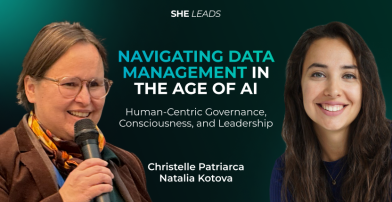
Navigating Data Management in the Age of AI: Human-Centric Governance, Consciousness, and Leadership

Only 2 Weeks Left Until the Data Management & AI ThinkLab

Venkatraman Ganesan About His Experience at the 14th Data Management & AI ThinkLab
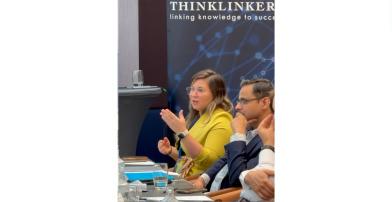
A Little Glimpse of the Networking at 14th ThinkLab in Prague

Petr Šrámek About His Experience at the 14th Data Management & AI ThinkLab

What it’s like to be part of the Data Management & AI ThinkLab?

Panel Discussions During the Data Management & AI ThininkLab
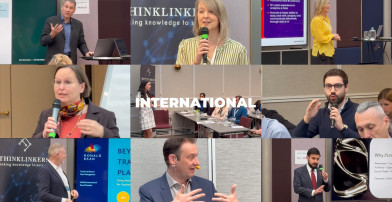
Speakers at The Data Management & AI ThinkLab

Elias Negrin About His Experience at the 14th Data Management & AI ThinkLab

Eeva Randen shares her experience at the 13th Data Management & AI ThinkLab