Why AI Fails Without Data Foundations: Turning Data Into Real Business Value

Short introduction of BluestoneX and the interviewee.
Bluestonex are SAP experts, specialising in data management, SAP BTP and enterprise
innovation. We work with organisations to build strong, scalable data foundations that support
digital transformation, analytics and AI - without adding unnecessary complexity.
Richard Henry is the Commercial Director at Bluestonex, working closely with organisations
across industries to design practical data strategies, implement master data management, and
help businesses turn data into a real business asset rather than a technical afterthought.
1. When it comes to Digital Transformation subjects, AI has stolen the show. Companies
have been investing heavily in AI pilots but only a small percentage of them resulted in
a quantifiable positive return on investment. How can Data Management assist and
help in turning the tide for the better?
AI hasn’t failed because the algorithms don’t work - it fails because the data foundations aren’t
ready.
Data Management plays a crucial role by ensuring that data is trusted, structured, governed and
aligned to business outcomes. Many AI initiatives start with “What can this tool do?” rather than
“What business problem are we trying to solve, and do we have the data to support it?”. Without a
clear data strategy, AI simply amplifies existing data problems at scale.
When organisations invest first in data models, ownership, quality and governance, AI becomes
far more likely to deliver measurable value. In that sense, Data Management doesn’t slow AI
down - it’s what allows AI to move from experimentation to impact.
2. When implementing AI use cases, what data problems usually surface first?
Typically, three issues surface almost immediately:
Inconsistent definitions: the same business concept means different things across systems or
teams.
Poor data quality: missing values, duplicates, or outdated records undermine model outputs.
Unclear ownership: no one is accountable for fixing issues once they appear.
These problems often exist long before AI is introduced, but AI makes them visible very quickly.
That’s why AI projects often stall not during model training, but when the business starts
questioning whether results can be trusted. At that point, organisations realise they need to go
back and fix the fundamentals.
3. On the other hand, Data Management also seems to suffer from a high failure rate, with
frequent disconnect between the data function and the business needs. Why do you
think that happens and how do you bridge that gap?
Data Management fails when it becomes too technology-led and disconnected from day-to-day
business reality.
Many initiatives are driven by IT or compliance teams with good intentions, but little engagement
from the business users who actually create and consume data. This results in complex
processes, over-engineered governance models, and tools that people work around rather than
with.
Bridging the gap requires:
- Starting with business outcomes, not data objects
- Designing processes that fit how people actually work
- Making governance enabling rather than blocking
When data management is framed as “helping the business move faster with confidence”,
adoption and value follow naturally.
4. Many organizations make the assumption that investing in data tools means becoming
data-driven. What is your definition of "data-driven" and how do you ensure that tools
support that objective?
Being datadriven isn’t about investing in tools or producing more dashboards — it’s about how an
organisation uses data to create value and make better business decisions.
A truly datadriven organisation:
- Treats data as a strategic asset aligned to clear business goals and outcomes
- Uses trusted, wellunderstood data to identify opportunities, not just report history
- Designs data experiences around the needs of people making decisions, not the
technology itself
To achieve this, organisations need to marry data capability with a humancentred design (HCD)
approach. That means starting with the decisions the business wants to improve, understanding
how people actually work, and then enabling the right data, insights and controls to support
those moments.
Tools should act as enablers — reducing friction, improving availability and quality of data at
source, and embedding insight directly into business processes. If tools do not clearly support
business objectives or create usable insight for users, then they become cost and complexity
rather than opportunity.
5. BluestoneX is the creator of the Maextro software solution. How does Maextro bring
organisations closer to becoming data driven and AI-ready?
Maextro addresses one of the biggest blockers to data-driven and AI-ready organisations:
operational master data chaos.
It helps organisations:
- Establish clear data models and standards
- Embed governance directly into business processes
- Improve data quality at the point of creation, not retrospectively
- Reduce dependency on IT for day-to-day data changes
By simplifying and standardising how core data is created and managed, Maextro helps
organisations build a reliable, scalable data foundation that supports analytics, automation and AI
initiatives with far less risk.
6. Where does the inspiration from Maextro come from and what gap does it fill in the
market?
Maextro was born out of real project experience. We repeatedly saw organisations invest heavily
in enterprise platforms, only to struggle with slow, errorprone and frustrating master data
processes.
The gap wasn’t another powerful tool - it was a practical, user-friendly way to manage data
properly at scale. Existing solutions often required deep technical skills, long implementation
cycles, and low tolerance for change.
Maextro fills that gap by combining governance, flexibility and user experience, allowing
organisations to start small, prove value quickly, and scale over time without losing control.
7. The Data Management discipline is evolving at tremendous speed, both in terms of
technology and in terms of business drivers. Where do you see data management in the next
3-5 years?
Data Management will become far more embedded and less visible. Rather than standalone
initiatives, it will be integrated into:
- Business processes
- Automation workflows
- AI pipelines
There will be greater emphasis on product-based thinking, where data is treated as a product
with owners, consumers and value metrics. At the same time, simplicity will become a
competitive advantage - organisations that overcomplicate governance will struggle to keep
pace.
8. For those entering just starting a Data Management role, what tips do you have for them?
Three key tips:
- Learn the business first: understanding how value is created matters more than mastering
tools. - Start small and be pragmatic: perfection kills momentum.
- Build relationships: Data Management is fundamentally about influencing, not enforcing.
If you can clearly articulate why good data matters to people’s daily work, you’re already ahead.
9. Lastly, we will soon meet at the 13th Data Management ThinkLab in Prague. What are you
looking forward to the most and what can the audience expect from you?
ThinkLab is always a highlight because it brings together practitioners who are dealing with very
real, very similar challenges. What I’m most looking forward to this year is the opportunity to have
an open, honest conversation about what data transformation actually looks like in practice -
beyond theory and buzzwords.
We’ll be sharing the stage with RS Group, which is especially exciting. Together, we’ll be talking
through their data transformation journey: where they started, the decisions they made along the
way, and some of the lessons learned when moving from ambition to execution. It’s a great
example of how a clear data strategy, strong foundations, and a pragmatic mindset can make a
real difference.
The audience can expect a practical, experience-led session - focused on what worked, what had
to be adjusted, and why getting the data fundamentals right was critical in enabling wider digital
and AI initiatives. It should be a very grounded discussion, and hopefully one people can
recognise their own challenges in.
Join our community on Linkedin
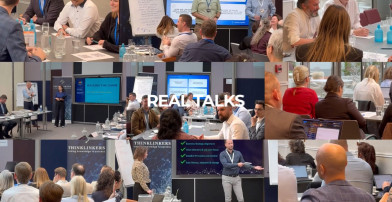
What it’s like to be part of the Data Management & AI ThinkLab?
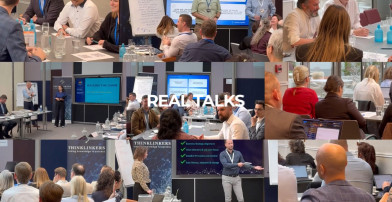
Panel Discussions During the Data Management & AI ThininkLab
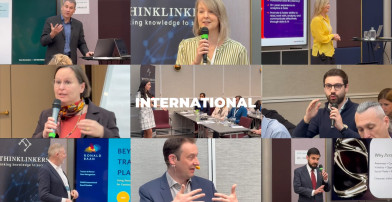
Speakers at The Data Management & AI ThinkLab

Elias Negrin About His Experience at the 14th Data Management & AI ThinkLab

Eeva Randen shares her experience at the 13th Data Management & AI ThinkLab

Shamik Banerjee About His Experience at the 13th Data Management & AI ThinkLab

Hello our dear Data community,

What Do ThinkLab Participants Associate It With?
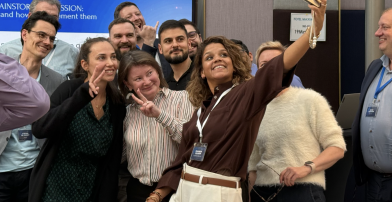
ThinkLab Without a Trending Audio

Martin Treder | His Experience at the 13th Data Management & AI ThinkLab